Confidence Building Strategies for Work and Life
Discover how to increase confidence, overcome self-doubt, and showcase your strengths!
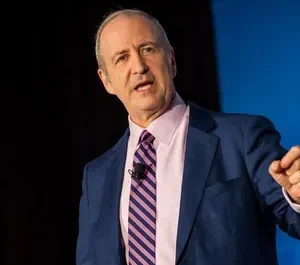
We all struggle sometimes to find the confidence we need. In this webinar, confidence and motivation expert Kirsty Hulse will teach practical skills to increase confidence, overcome self-doubt, and showcase your strengths.
You will learn (Learning Objectives):
- How to improve your self-image by overcoming your negativity bias, softening your inner critic, and learning to think confident thoughts throughout your day.
- How to develop resilience when dealing with difficult situations.
- How to demonstrate your unique confident traits and project your confidence outwards.
About the Speaker: Kirsty Hulse
The founder of Roar! Training, Kirsty is a highly qualified coach. Her training has been described as “game changing”, “life changing,” and from the thousands of people she’s worked with, 100% of attendees would recommend her work to a colleague.
Kirsty founded her first company Manyminds at 26, a marketing agency with global clients like Virgin Atlantic and IBM which turned over nearly a million dollars in its first year of trading.
In 2 years, she scaled the business to a team of over 50 independent, remote staff, disrupting a traditional landscape.
She also wrote a bestselling book and is a standup comic, having performed a show at the 2017 Edinburgh Fringe, she brings a passion for humor into her work.
Tags:
boost professional confidence, confidence building strategies, Kirsty Hulse confidence expert, overcome self-doubt, resilience development
Mental Monsters: How to Overcome Emotions and States of Mind that Sabotage Team Trust and Personal Well-Being
Most have heard of IQ and EQ (emotional intelligence) and how they contribute to our overall potential. A new kind of intelligence, Positive Intelligence (PQ) is on the rise.
Positive Intelligence (PQ) helps us maximize our potential.
However, according to the research of Shirzad Chamine, 80% of all teams operate below a critical Positive Intelligence level, and fall short of achieving their true potential for success and happiness.
Why? Mental Saboteurs.
Saboteurs are the voices in our head that generate negative emotions in the way we handle life’s everyday challenges.
They represent automated patterns in our minds for how to think, feel, and respond. They cause stress, anxiety, self-doubt, frustration, restlessness, and unhappiness. They sabotage our performance, wellbeing, and relationships.
In this training you will learn:
- The 10 saboteurs and how they impact performance.
- How to identify and overcome your top mental saboteurs.
- How to increase your Positive Intelligence (PQ).
- How to apply PQ tools and techniques to increase performance and fulfillment.
Tags:
By Josh Dye, increase Positive Intelligence, overcome mental saboteurs, Positive Intelligence PQ, PQ for team performance, Shirzad Chamine mental saboteurs
Upstream Thinking: How to Solve Problems Before They Happen
It is common to think that problems are natural and inevitable.
For example:
- Clients will frequently have questions.
- It is common for clients to get confused.
- Some people will always show up late.
- It’s normal to scramble to meet a project deadline.
What if it didn’t have to be this way?
Well, it doesn’t. Upstream thinking can solve a lot of our annoying, costly probems before they happen!
In this training we will learn:
- Barriers to Upstream thinking.
- How to identify if a problem has an upstream cause.
- Questions to ask to when solving a problem with an upstream cause.
- How to use second order thinking to avoid unintended consequences when solving problems.
- How to build systems to solve problems before they start.
Tags:
By Josh Dye, proactive problem solving, problem prevention strategies, second order thinking, systems thinking for problems, upstream thinking
Stepping Up: How to Lead from Any Position or Role
Leading and creating is no longer about hierarchy. It is about taking initiative, having the guts to do something different, and risking failure. It is about caring enough to put in extra thought, time, emotion, and energy to make something remarkable happen.
But leading when you don’t have the position or “title” of authority is tricky.
In this training we cover strategies you can use to make a difference no matter the position you hold.
You will learn:
- The difference between leadership position and leadership influence.
- How to increase influence by becoming the ‘go to’ expert in a specific area of your work.
- How to leverage moments of failure to create meaningful progress.
- How to observe changing preferences and behaviors in order to adapt the services you provide.
- How to give yourself permission to make positive changes and take accountability over results.
Do you want your work to be more fulfilling and special? Then lead and create, regardless of your position. Learn how in this dynamic presentation!
Tags:
By Josh Dye, increase professional influence, influence at work, informal leadership skills, lead with authority, leadership without title
How to Decide: Simple Tools for Making Better Choices
What do you do when you’re faced with a big decision? If you’re like most people, you probably make a pro and con list, spend a lot of time obsessing about decisions that didn’t work out, get caught in analysis paralysis, endlessly seek other people’s opinions to find just that little bit of extra information that might make you sure, and finally go with your gut.
What if there was a better way to make quality decisions so you can think clearly, feel more confident, second-guess yourself less, and ultimately be more decisive and be more productive?
Making good decisions doesn’t have to be a series of endless guesswork. Rather, it’s a teachable skill that anyone can sharpen.
In this webinar, bestselling author Annie Duke and former professional poker player lays out a series of tools anyone can use to make better decisions.
You will learn:
- To identify and dismantle hidden biases.
- To extract the highest quality feedback from those whose advice you seek.
- To more accurately identify the influence of luck in the outcome of your decisions.
- When to decide fast, when to decide slow, and when to decide in advance
- To make decisions that more effectively help you to realize your goals and live your values.
- As a result of this weinbar you will achieve happier outcomes and fewer regrets!
About the Speaker: Annie Duke
Author. Professional Speaker. Decision Strategist. Former Professional Poker Player.
Annie Duke has leveraged her expertise in the science of smart decision making to excel at pursuits as varied as championship poker to public speaking. Annie’s latest book, How to Decide: Simple Tools for Making Better Choices, is available on September 15, 2020 from Portfolio, a Penguin Random House imprint. Her previous book, Thinking in Bets, is a national bestseller. In the book, Annie reveals to readers the lessons she regularly shares with her corporate audiences, which have been cultivated by combining her academic studies in cognitive psychology with real-life decision making experiences at the poker table.
For two decades, Annie was one of the top poker players in the world.
In 2004, she bested a field of 234 players to win her first World Series of Poker (WSOP) bracelet. The same year, she triumphed in the $2 million winner-take-all, invitation-only WSOP Tournament of Champions. In 2010, she won the prestigious NBC National Heads-Up Poker Championship. She retired from the game in 2012. Prior to becoming a professional poker player, Annie was awarded a National Science Foundation Fellowship to study Cognitive Psychology at the University of Pennsylvania, where she earned her master’s degree.
Annie now spends her time writing, coaching and speaking on a range of topics such as decision fitness, emotional control, productive decision groups and embracing uncertainty. She is a regularly sought-after public speaker, addressing thousands in keynote remarks at conferences for organizations ranging from the Investment Management Consultants Association to the Big Ten Conference.
She has been brought in to speak to the executive teams or sales forces of organizations like Marriott, Gaylord Resorts and Ultimate Software, among others. She is a sought-after speaker in the financial sector, with clients such as Susqehanna International Group and CitiBank. Annie regularly shares her observations on decision making and critical thinking skills on her blog, Annie’s Analysis, and has shared her poker knowledge through a series of best-selling poker instruction and theory books, including Decide to Play Great Poker and The Middle Zone: Mastering the Most difficult Hands in Hold’em Poker (both co-authored with John Vorhaus).
Annie is a master storyteller, having performed three times for The Moth, an organization that preserves the art of spoken word storytelling. One of her stories was selected by The Moth as one of their top 50 stories and featured in the organization’s first-ever book. Her passion for making a difference has helped raise millions for charitable causes.
In 2006, she founded Ante Up for Africa along with actor Don Cheadle and Norman Epstein, which has raised more than $4 million for Africans in need. She has also served on the board of The Decision Education Foundation. In 2009, she appeared on The Celebrity Apprentice, and raised $730,000 for Refugees International, a charity that advocates for refugees around the world.
In October 2013, Annie became a national board member for After School All-Stars. In 2014, Annie co-founded The Alliance for Decision Education to build a national movement that empowers teachers, school administrators and policymakers to bring Decision Education to every Middle and High School student. In 2016, she began serving on the board of directors of The Franklin Institute, one of America’s oldest and greatest science museums. In 2020, she joined the board of the Renew Democracy Initiative.
Tags:
better decision tools, confidence in decision making, decision making skills, overcoming analysis paralysis, practical decision framework
Ethical Intelligence
Ethical intelligence may not get as much attention as other forms of “smarts,” but as Bruce Weinstein will show in this webinar, it is the most practical, valuable, and even courageous form. Ethical intelligence determines success on the job, fulfillment in relationships, and sense of self-worth.
In this webinar by ‘The Ethics Guy’ Dr. Bruce Weinstein, you will learn how to apply the five principles of ethical intelligence to the toughest problems you face with clients, colleagues and other valued people in your life.
In this webinar you will learn how to apply the five principles of ethical intelligence to work and life situations (Learning Objectives):
- Do no harm
- Make things better
- Respect others
- Be Fair
- Care
Learn how to strengthen your personal and professional relationships, and make the right decisions every time, everywhere.
About the Presenter: Dr. Bruce Weinstein ‘The Ethics Guy’
Forbes Contributor Bruce Weinstein, The Ethics Guy®, shows companies around the world how ethical leadership at every level is the key to sustained success.
Some of his books include:
• Ethical Intelligence: Five Principles for Untangling Your Toughest Problems at Work and Beyond
• The Good Ones: Ten Crucial Qualities of High-Character Employees
• Is It Still Cheating If I Don’t Get Caught? (for tweens and teens)
Bruce has discussed ethical leadership over 200 times on national and international broadcast and cable television news programs. He received a B.A. in philosophy from Swarthmore College and an M.A. and Ph.D. in philosophy with a concentration in bioethics from Georgetown University and the Kennedy Institute of Ethics. The W. K. Kellogg Foundation in Battle Creek, Michigan awarded Bruce a National Fellowship in Leadership Development.
Bruce lives in New York with his wife Kristen Bancroft, a compliance professional in the financial services industry. To relax Bruce enjoys traveling to national parks with his wife, playing drums, and trying to figure out the plot of “The Godfather, Part II.”
Tags:
ethical decision making, ethical intelligence, leadership and relationship, professional integrity, workplace ethics
Awe: The New Science of Everyday Wonder and How it Can Transform Your Life
Awe is mysterious.
How do we begin to quantify the goose bumps we feel when we see the Grand Canyon, or our utter amazement when we watch a child walk for the first time?
Fortunately awe awe is not limited to rare or extraordinary experiences.
It is something we can find in everyday life.
In this webinar author and professor Dacher Keltner will provide guidance on how to cultivate a greater awareness of awe-inspiring moments and incorporate them into daily routines.
You will also learn how to use awe to achieve the following (Learning Objectives):
- Reduce stress and improve well-being.
- Foster a sense of purpose and meaning.
- Enhance kindness and prosocial behavior.
- Improve cognitive function and creativity.
About the Speaker: Dacher Keltner
Dr. Keltner is one of the world’s foremost emotion scientists. He has written for many popular outlets, from The New York Times to Slate.
He is a professor of psychology at UC Berkeley and the director of the Greater Good Science Center. He has over 200 scientific publications and six books, including Born to Be Good, The Compassionate Instinct, and The Power Paradox.
Tags:
awe and wellbeing, creativity boost, kindness and empathy, purpose and meaning, stress reduction
Furry Friends, Happy Minds: The Surprising Ways Pets Boost Mental Health
Most pet owners know that spending time with their pets helps them feel good.
But did you know that watching animal videos could make you more productive?
Or that owning a dog might help you combat an addiction?
No one understands the animal-human bond and all the mental health benefits of owning an animal better than Dr. Doug Mader.
Dr. Mader has a long history of caring for everything from household pets to zoo animals.
In this webinar you will learn (Learning Objectives):
- The science behind how animals help with our mental health and well-being.
- How to find the best pet for your lifestyle.
- How to deal with the grief surrounding the loss of a pet.
About the Speaker: Dr. Doug Mader
Dr. Doug Mader is a triple board-certified veterinary specialist and has been a veterinarian for over three decades. Doug has also authored the award-winning memoir, The Vet at Noah’s Ark.
He is an internationally recognized speaker, has written three best-selling medical textbooks and numerous book chapters and scientific publications, and has had long standing pet columns in the Long Beach Press Telegram, Reptiles magazine, and the Key West Citizen.
Tags:
addiction recovery support, animal therapy, Health, pet companionship, pet loss grief, pets and mental health, Well-being
How to Help a Loved One With an Addiction
Almost everyone knows someone who is battling a drug or alcohol problem.
But most people have no idea what to do about it.
Should you step in or step back?
Some advise detaching from a loved one with a substance use disorder. But detachment often doesn’t help. Connection does.
That’s what Community Reinforcement and Family Training (CRAFT) is about.
It’s a set of skills family members learn and practice. Within 12 weeks, about 75% of loved ones with a drug or alcohol problem get into recovery.
In this webinar CRAFT trainer Laurie MacDougall will share ways to help loved ones with an addiction.
You will learn (Learning Objectives):
- Misconceptions about substance use.
- Skills that can improve communication.
- How to increase the chances a loved one will accept help.
About the Speaker: Laurie MacDougall
Laurie MacDougall is a former math teacher and extremely active in the recovery community. She is a Certified Family Peer Specialist in the state of Rhode Island and serves as co-chair to the Family Task Force.
She also sits on the RI Governor’s Overdose Intervention and Prevention Task Force.
Laurie has worked with hundreds of families nationally and internationally coaching and educating them in the CRAFT based approach, and has now incorporated much of the Invitation to Change into the meetings design.
Tags:
addiction support, communication skills, CRAFT method, developmental Disabilities, family intervention, Mental Health, substance use disorder