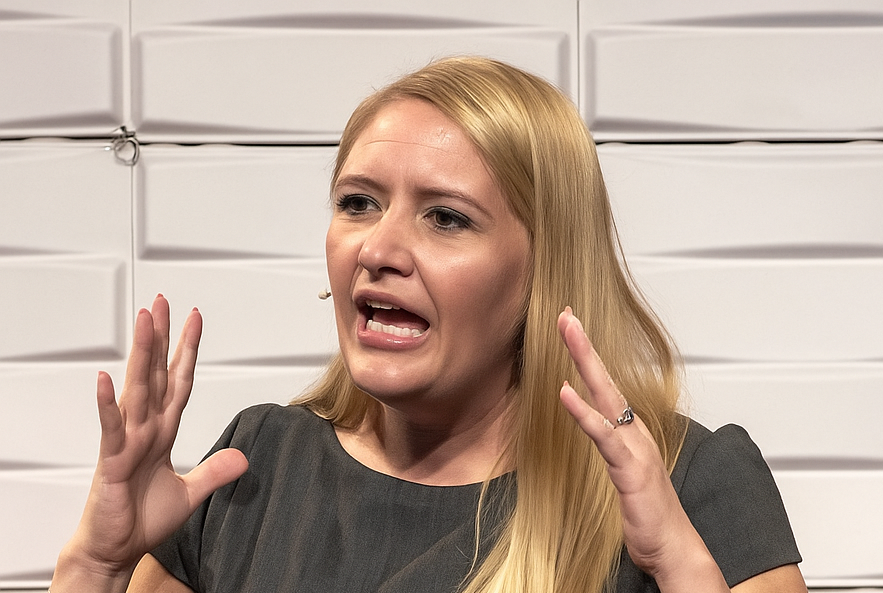

The Mountain is You: Transforming Self-Sabotage to Self-Mastery

This webinar is about self sabotage. Why we do it, when we do it, and how to stop doing it…for good.

Coexisting but conflicting needs create self-sabotaging behaviors. This is why we resist efforts to change, often until they feel completely futile.

In this webinar you will learn how to:

  • Extract crucial insights from your most damaging habits.
  • Build emotional intelligence by understanding your brain and body.
  • Release past experiences.
  • Step out of your own way, and into your potential.

For centuries, the mountain has been used as a metaphor for the big challenges we face, especially ones that seem impossible to overcome.

To scale our mountains, we actually have to do the deep internal work of excavating trauma, building resilience, and adjusting how we show up for the climb.

In the end, it is not the mountain we master, but ourselves.

Learn how in this webinar!

About the Speaker: Brianna Wiest

Brianna is the bestselling author of the books 101 Essays That Will Change The Way You Think, The Mountain Is You, The Pivot Year, and more. Her books have sold over 1 million copies, regularly appear on global bestseller lists, are currently being translated into 40+ languages.

After working as a journalist as a post-graduate, writing for publications such as Forbes and Teen Vogue, Brianna began sharing her creative writing and personal reflections gained from years of self-inquiry and meditation practice. Over time, her work was shared around the world, and has since touched millions with messages of empowerment, self-reflection, and hope.

Today, Brianna is a partner at Thought Catalog, where she first published her books and began sharing her personal writing. She lives and works in Los Angeles, and travels to speak at businesses, conferences and bookstores worldwide.

Tags:

Emotional Intelligenceresilienceself careself masteryself sabotageTrauma

How to Speak With Kids About Traumatic Events Without Added Fear and Anxiety

Speaker Caroline Danda

Popular based on survey feedback!

Social media and 24-hour news provides a constant source of unending information that can spread like wildfire. Shielding kids from news and information is not an option.

What’s a parent or professional that works with kids to do?

Don’t be afraid of starting conversations about hard topics. These conversations are a must. Keep the lines of communication open. Calm and Connection are the key!

In this webinar you will learn (Learning Objectives):

  • How to make the conversations happen.
  • What to do before the conversation.
  • When and how to most effectively speak with kids about traumatic events.

About the Speakers: Dr. Caroline Danda, LP and Carron Montgomery, MSPC, LPC, RPT

Dr. Caroline Danda is a clinical psychologist in private practice who specializes in working with children and adolescents with anxiety, depression, and other emotional or behavioral regulation problems. She loves working with children and teens who have “big emotions.” She has a passion for normalizing mental and emotional well-being and helping youth and their families not only resolve current challenges but also develop foundational skills for thriving.

Carron Montgomery is a Licensed Professional Counselor, Registered Play Therapist, Level II trained EMDR, and trauma specialist. At the outset of her career, Carron worked for two nonprofit organizations: the first focused on counseling survivors of abuse, and the second focused on serving low-income families and victims of trauma. Nine years ago, she started a private practice with two other women to specialize in treating anxiety, depression, OCD, trauma, grief, and loss. Carron utilizes a client-centered approach that includes collaboration with each client’s team of professionals–teachers, doctors and school social workers and primary caregivers.

Tags:

calm conversations with childreneffective communicationparenting after traumaPopularTrauma

De-Escalation: Practical Techniques to Manage Emotional Reactions and Hostile Behaviors

Speaker Josh Dye

Popular based on survey feedback!

In this training you will learn practical de-escalation techniques to help manage moments of crisis, intense emtional reactions, and hostile behaviors in way that promote positive outcomes for the people you serve.

We will cover trauma informed strategies that reduce the likelihood of a potential crises occurring, and situational awareness safety tips to follow when working with someone who has the potential to behave in a hostile manner.

You will also learn (Learning Objectives):

  • Common causes and triggers of aggressive behavior.
  • Skills for active listening and empathy.
  • The role of nonverbal communication in de-escalation.
  • How to identify signs of crisis situations and learn strategies for managing them effectively.
  • Best practices for preventing future crises.
  • Situational awareness safety tips to keep you safe.

By the end of this training you will have a greater understanding of de-escalation techniques and how to use them effectively.

Tags:

By Josh Dyeconflict resolutioncrisis interventionde-escalation techniquesDeescalationeffective communicationPopularSituational AwarenessTrauma

Re-Write: Healing Trauma Through Creative Outlets

Speaker Duygu Balan

Popular based on survey feedback!

In this webinar presented by Licensed Professional Clinical Counselor Duygu Balan you will learn about identifying and treating trauma-related stressors through creative expression.

You don’t necessarily need to talk about your traumatic experiences to heal.

Instead, a creative outlet like writing might be the therapeutic exercise you need to work through the pain and heal your wounds.

In this webinar you will learn (Learning Objectives):

  • How trauma affects us.
  • Why creative writing heals us.
  • Other creative outlets that can help someone who has experienced trauma.
  • How to know when to seek professional help.

About the Speaker: Duygu Balan

Duygu Balan, LPCC is a licensed psychotherapist specializing in familial and intergenerational trauma, and attachment wounding. She is a PACT (Psychobiological Approach to Couples Therapy) Level II trained couples therapist, and a certified clinical trauma professional.

Duygu is the first author for Confidently Chill: An Anxiety Workbook for New Adults (Routledge 2024), and Re-Write: A Trauma Workbook of Creative Writing and Recovery in Our New Normal (Routledge 2023).

Tags:

Creative OutletsEmotional RecoveryHealingMental HealthPopularresilienceself careTrauma

Drowning in Empathy: The Cost of Vicarious Trauma

Speaker Amy Cunningham

Popular based on survey feedback!

Post-Traumatic Stress Disorder (PTSD) is a health issue most people are familiar with, but what about those individuals who dedicate their lives to caring for the traumatized? What is the cost to them? Every day, professionals in the ‘caring professions’ selflessly serve traumatized people.

However, research has shown it comes at an extreme cost. The empathetic nature of caring professionals exposes them to an increased risk of vicarious trauma, or Compassion Fatigue, where the helper during a crisis can also become personally affected without experiencing the trauma. The PTSD symptoms can begin to manifest in those serving the traumatized and begin to create significant personal, emotional, and psychological changes within a person.

Amy Cunningham discovered Compassion Fatigue in her work as a supervisor of a juvenile probation therapeutic group home. Not realizing it, Amy’s constant exposure to the troubled teens and their issues would change her, and she developed Compassion Fatigue. After several months of implementing strategies recommended for Post Traumatic Growth, she began to normalize and find healing.

In this webinar, you will learn: (Learning Objectives)

  • How to differentiate between stress, burnout, and compassion fatigue.
  • How to recognize the signs and symptoms of compassion fatigue.
  • How to identify the trajectory of compassion fatigue and begin to implement the 5 resilience’s needed to assist you in achieving post-traumatic growth.

About the Presenter: Amy Cunningham

Amy inspires individuals to live a life of compassion, empathy, passion, and purpose. She has spent the last 19 years working with nonprofits and mental health organizations, which began with a focus on assisting adolescents to overcome trauma and redefine their lives.

After recognizing the negatives effects that caring can cause, she became a certified Compassion Fatigue Educator through Green Cross Traumatology, and has traveled throughout the nation advocating a balance between work, life, and taking care of oneself. In 2011, Amy developed the Compassion Fatigue Training Program for the Center for Health Care Services – a division of Bexar County, Texas’ community mental health agency.

Amy currently serves as a Talent Management Consultant for CHRISTUS Health. CHRISTUS Health is an international non-profit hospital system with more than 35,000 employees. Amy serves on a team dedicated to the implementation and planning of all Leadership Development programs for the CHRISTUS Health System.

Since understanding Compassion Fatigue is vitally important to employee health, Amy pioneered the development of Compassion Fatigue training for CHRISTUS.

Tags:

BurnoutCompassion FatiguePopularPTSDresilienceself carestressTrauma

Stress Management: Reduce Vicarious Trauma, Compassion Fatigue and Burnout

Popular based on survey feedback!

In recent years, the importance of self-care practices on career success has increased.

This webinar will explore two questions:

1)What does a healthy identity look like with the incorporation of mind-body-spirit self-care practices that manage stress?

2) What are the ways to implement effective mind-body-spirit practices to achieve and maintain wellness and wholeness?

Objectives:

  • Attendees will be able to identify their stressors and their impact on their lives
  • Attendees will be able to define the difference between vicarious trauma, compassion fatigue, and burnout.
  • Attendees will learn practical stress relieving tools.
  • Attendees will be able to identify ways to set professional and personal boundaries in order to alleviate stress.

Tags:

BurnoutCompassion FatigueGrowthPopularresilienceself carestressTrauma