
Working through Crisis: Strategies to Support Yourself and Clients

Working through Crisis: Strategies to Support Yourself and Clients
Right now many people are working through a crisis. The ongoing pandemic and recent staff and service shortages are creating incredible challenges for clients and the professionals that help meet their basic needs.
To survive this moment we need more than basic coping mechanisms. We need resilient strategies that help us physically and emotionally endure whatever we are facing. We also need tips to engage with clients when things get tough that are beyond our control.
In this training we will explore: (Learning Objectives)
Tags:
Boundaries, By Josh Dye, client communication, coping strategies, crisis management, emotional resilience, resilience, self care
People often say I have no regrets, or live with no regrets.
But let’s face it, regrets are inevitable.
We have all done things that we wish we had handled differently.
According to author Daniel Pink, there are 4 categories of regrets:
Handled properly, regrets help us learn.
In this training we will dig into the 4 categories of regrets and learn how we can use them to do the following (Learning Objectives):
Tags:
By Josh Dye, decision improvement, emotional growth, learning from regret, performance boost, regret categories, resilience, self care

In the workplace, stress is often viewed in purely negative terms.
It’s seen as a response that should simply be minimized or pushed aside. However, it’s possible to use stress to fuel positive change.
In this webinar you will learn (Learning Objectives):
About the Presenter: Dr. Heidi Hanna
As an experienced speaker, Dr. Heidi Hanna has been featured at many national and global conferences, including the Fortune Magazine Most Powerful Women in Business Summit, ESPN Women’s Leadership Summit, and the Million Dollar Round Table.
Dr. Hanna is the Chief Energy Officer of Synergy Brain Fitness, a company providing brain-based health and performance programs to individuals and organizations, a Founding Partner of the Academy for Brain Health and Performance, and a Fellow and Advisory Board Member for the American Institute of Stress.
She is a NY Times bestselling author of several books, including The Sharp Solution, Stressaholic, and Recharge.
Her clients have included Google, Starbucks, Microsoft, Morgan Stanley, and WD40 as well as the PGA Tour and the National Football League. Dr. Hanna serves as an Everyday HealthExpert Wellness Advisory Board member, and a National Board Member and Certified Humor Professional with the Association for Applied and Therapeutic Humor, although she won’t admit she’s funny.
Tags:
employee support, positive stress, resilience, self care, stress management, stress response, workplace wellness
If you’re like most people, the relentless daily grind of go-go-go, do-do-do, can run down your energy and deplete your resources.
While most of us find our lives full of “Upstate” moments that rev up our stress engines, it doesn’t have to be this way.
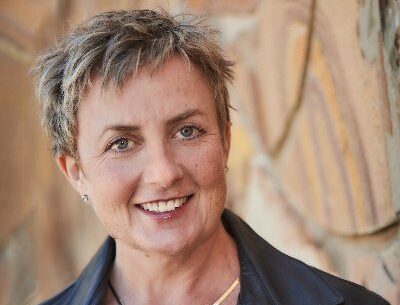
In the webinar world-renowned sleep researcher Sara C. Mednick, PhD, will show us how we can access the most replenishing and repairing aspects of sleep through activities and moments that happen during our day by diving into our “Downstate.”
Dr. Mednick shows that bringing ourselves back to the Downstate is critical for our health, well-being, and cognitive longevity.
You will learn (Learning Objectives):
About the Speaker: Dr. Sara Mednick
Professor Sara C. Mednick is a cognitive neuroscientist at the University of California, Irvine and author of The Hidden Power of the Downstate (Hachette Go!, pub date: April, 2022) and Take a Nap! Change Your Life. (Workman).
Dr. Mednick’s seven-bedroom sleep lab works literally around-the-clock to discover methods for boosting cognition by napping, stimulating the brain with electricity, sound and light, and pharmacology. Her lab also investigates how the menstrual cycle and aging affect the brain. Her science has been continuously federally funded (National Institute of Health, National Science Foundation, Department of Defense Office of Naval Research, DARPA).
She received a PhD in Psychology from Harvard University, and then completed a postdoc at the Salk Institute for Biological Studies and UC San Diego.
Tags:
cognitive longevity, downstate recovery, natural rhythms, resilience, restorative sleep, self care, stress relief

Strength is built by pushing back against whatever life throws at you. Strength is built by doing what’s hard and leaving your comfort zone.
Over time, everything gets messier and more disorganized. Even if you do nothing, everything still deteriorates and degrades. Without order, optimal function is impossible.
The consequence of suboptimal functioning is mediocre living.
Strong people resist the effects of entropy.
Strength is what allows you to build, rejuvenate, and organize your energies. Strength can take your life from subpar to outstanding.
In this webinar you will learn (Learning Objectives):
About the speaker: Ed Latimore
Ed Latimore is a best-selling author, former professional heavyweight boxer, and competitive chess player. His writing focuses on self-improvement and a practical approach to stoic philosophy.
Over 30,000 men and women subscribe to his newsletter, Stoic Street Smarts, for tips about self growth
Tags:
emotional resilience, holistic wellness, mental toughness, physical strength, resilience, self care, strength building
From in-body organ regeneration and 200-year lifespans, to moveable cities and climate modification, many scientific advances that feel far off — even fictional — are likely right around the corner.
Understanding the paradigm-shifting nature of what is to come is essential for ensuring transitions that preserve human life and dignity.
In this webinar you will learn (Learning objectives):
About the Speaker: Matthew LaPlante
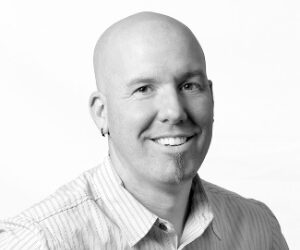
Matthew LaPlante is the co-writer of Lifespan: Why We Age, and Why We Don’t Have To, a New York Times best seller. He is also the founder and host of a radio program on Utah Public Radio called UnDISCIPLINED, and is the co-host of the Lifespan podcast. Matthew also serves as associate professor of journalistic writing at Utah State University.
Tags:
AI advancements, emerging technologies, future innovations, life extension, quantum computing, resilience, self care

Are you tired of bending over backwards for everyone else while no one really looks out for you?
Does it feel like you are always trying to make others happy, and if you ever dare set a limit, you get pushback or guilt trips?
Do you secretly fear saying no because you’re worried people will no long value, or even like you, if you do?
If so, this is the webinar for you.
When you KNOW where your boundaries are and can communicate them confidently, all this will change.
In this webinar you will learn how to:
Get ready to put the right boundaries in place, and start listening to yourself and confidently setting your limits without feeling guilty, stressed or selfish.
About the Speaker: Julia Kristina
Julia is a world class therapist, teacher and speaker who has a natural ability to connect with both individuals and groups because of how she is able to bring deep conversations to the surface, and bring clarity to the complex things that make us perfectly imperfect beings.
From the moment Julia Kristina learned that there was such thing as a job where one could help another human being grow, heal and make changes that would transform their lives, and thus the lives of generations to come, she knew she had to do whatever it took to become a therapist.
Shortly after becoming a therapist, she realized that her love of therapy was followed closely by her love of teaching and public speaking – but being a mom of small children, wasn’t willing to spend her evenings and weekends at social and networking events to build out this part of her business, so she hopped online and started giving live mental wellness and personal development talks to what quickly became an audience of thousands of raving fans and followers that connected instantly with her honest, clear, yet easy and relatable way of communicating.
From there, she’s been invited to speak at regional and national conferences and on news segments as an mental wellness and mindset expert, has created her own suite of personal development courses, programs and seminars, and most recently, Julia and her Associates have began bringing their expertise to their local community through in-person corporate lunch and learns and day long or multi day workshops and trainings.
Tags:
assertiveness, Boundaries, limit setting, resilience, saying no, self care, self respect

As we struggle to keep up in a knowledge economy that never sleeps, we arm ourselves with life hacks, to-do lists, and an inbox-zero mentality, grasping at anything that will help us work faster, push harder, and produce more.
There’s just one problem: most of these solutions are making things worse.
Creativity isn’t produced on an assembly line, and endless hustle is ruining our mental and physical health while subtracting from our creative performance. Productivity and Creativity are not compatible; we are stuck between them, and like the opposite poles of a magnet, they are tearing us apart.
When we’re told to sleep more, meditate, and slow down, we nod our heads in agreement, yet seem incapable of applying this advice in our own lives.
Why do we act against our creative best interests?
WE HAVE FORGOTTEN HOW TO FLOAT.
The answer lies in our history, culture, and biology. Instead of focusing on how we work, we must understand why we work―why we believe that what we do determines who we are.
This webinar will explore how our work culture creates contradictions between what we think we want and what we actually need, and points the way to a more humane, more sustainable, and, yes, more creative, way of working and living.
About the Speaker: Rahaf Harfoush
Rahaf Harfoush is a Strategist, Digital Anthropologist, and Best-Selling Author who focuses on the intersections between emerging technology, innovation, and digital culture.
She is the Executive Director of the Red Thread Institute of Digital Culture and teaches “Innovation & Emerging Business Models” at Sciences Politique’s school of Management and Innovation in Paris. She is currently working on her fourth book.
Her third book, entitled “Hustle & Float: Reclaim Your Creativity and Thrive in a World Obsessed with Work,” was released in 2019. She has been featured by Bloomberg, The CBC, CTV, and Forbes for her work on workplace culture.
Tags:
creativity boost, mental wellness, productivity myths, resilience, self care, sustainable work, work-life balance
Sometimes things suddenly change and we find ourselves grasping for a new normal.
Examples include:
These sudden changes can leave us feeling out of sorts, lost, uncomfortable, and not knowing what to do next.
In this we will cover how to develop a mindset that adapts quickly when changes happens.
You will learn: (Learning Objectives)
Tags:
adapting to change, By Josh Dye, coping strategies, life transitions, mindset shift, resilience, self care
We live in world of high stress. From intense workloads, to looming deadlines, to personal difficulties- stress takes on many forms that adversely affect productivity, performance, and health.
Stress is a real problem that affects the bottom line of work and life. When we try to manage stress instead of using it to our advantage it makes us feel:
When we embrace the power of stress utilization we realize that we are in charge of our inspiration and energy levels and we become:
Based on in-depth scientific research of how the human brain and body processes stress, working directly with hundreds of clients from some of the most intense environments imaginable, and challenging personal experiences, Dr. Terry Lyles has pioneered the field of stress utilization. Stress is not something that can be managed; but something that can be used and controlled for maximized output and success.
This insightful and eye-opening presentation will teach you: (Learning Objectives)
Most of all, Terry shows you that when you take hold of stress you become a better more productive leader, manager, employee, and person in every area of your life.
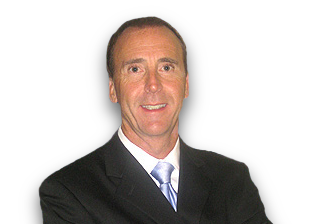
About the Presenter: Dr. Terry Lyles
Dr. Terry Lyles’ work is focused on teaching groups of all ages how to navigate life’s storms and difficult situations through stress utilization and work/life balance training.
Terry has spent his life measuring and studying human performance. He holds a Ph.D. in psychology, has conducted extensive research in sports science, and is an expert in biotelemetry and psycho-telemetry.
Recognized as a thought leader in his field, Dr. Terry Lyles has appeared on NBC, ABC, USA Today, CNN, Headlines News, The Big Idea with Donny Deutsch, FOX News, and in U.S. News & World Report. He has also hosted a premier talk show sponsored by Success Magazine and was heard on-air as the “Stress Doctor” in south Florida.
Dr. Lyles has spent the past 20 years working with a diverse group of clientele in extreme settings. He has brought the vital tool of stress utilization to organizations like NASCAR Evernham Motorsports, DaimlerChrysler, Macy’s West, Pfizer, Universal Studios, ABC, ESPN, and Disney.
Perhaps the greatest teacher has been Terry’s own personal experiences. He has voluntarily placed himself into emotionally intense environments and situations like supporting fire-rescue workers in and around Ground Zero, helped international forensic medical teams in the Asian tsunami-torn area, and served regularly as a resource for other regions experiencing hurricanes and natural disasters.
He also has served as a caretaker for his own adult son—diagnosed with Quadriplegic Cerebral Palsy, he wakes up every day facing an uphill battle against his physical limitations. Despite being given dismal odds, his son emotes joy and powers through the day with immense motivation. His son’s example made Terry ask an impactful question, “What is my excuse?” and then “What is your excuse?”
No one should live as a slave to his or her stress. Terry knows without a doubt that his time- tested, scientifically-measured approach to stress utilization fosters creativity, cultivates motivation, and increases productivity.
Tags:
energy management, productivity tips, resilience, self care, stress, work-life balance